
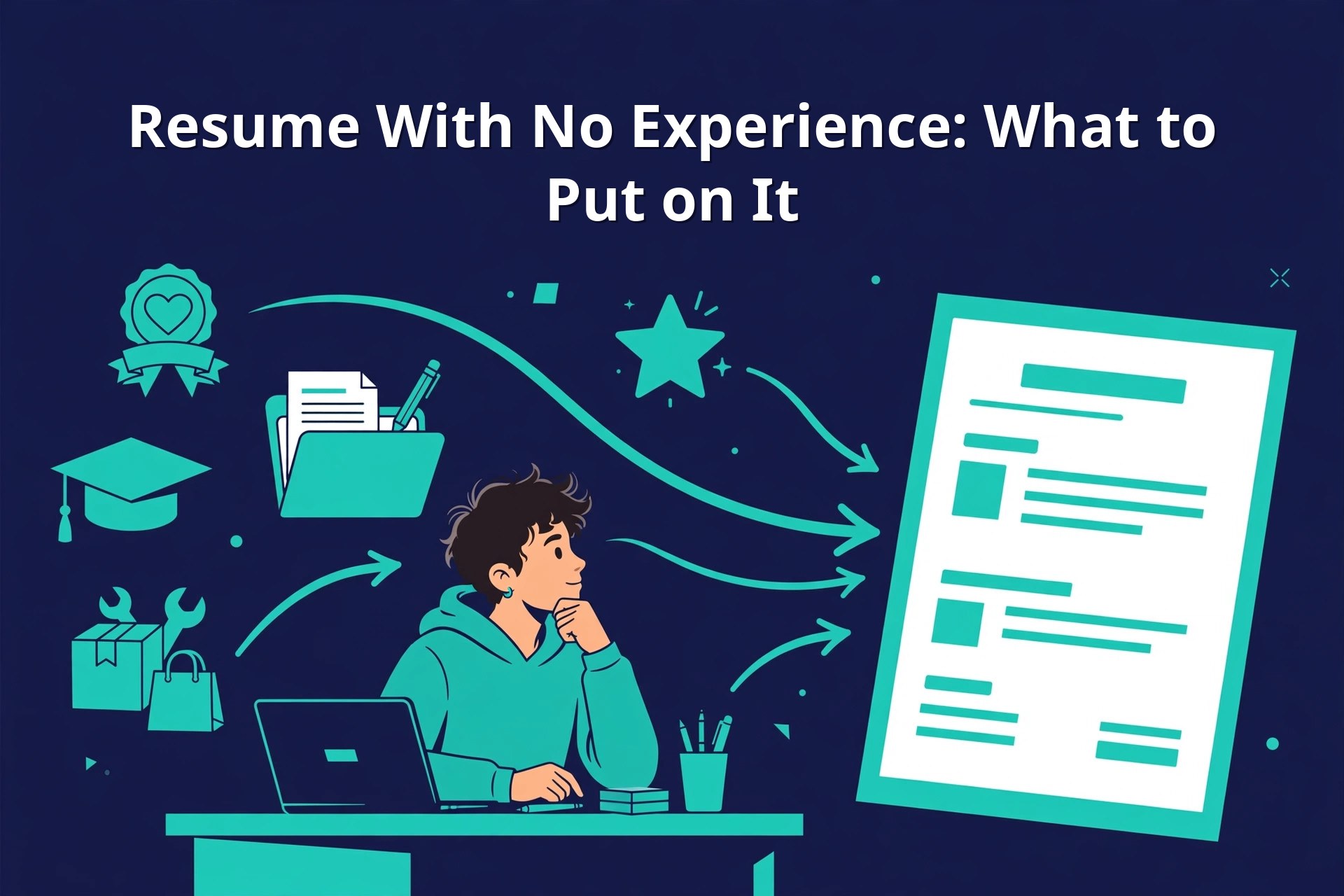
Here's the secret nobody tells first-time job seekers: "no experience" almost never means no experience — it means no job title yet. You've done class projects, volunteered, run a side hustle, led a group, learned tools on your own: that's all resume material. The problem isn't an empty page; it's that nobody taught you to translate your life into the language hiring managers scan for.
This guide gives you a full annotated example, shows you where to find real content for every section, and covers the mistakes that keep no-experience resumes in the bin.
Where "Experience" Actually Comes From
Before you write a word, do a 20-minute inventory. Most first-time job seekers find 6–10 usable items:
- Class projects with real deliverables. Built a website for a course, ran a mock marketing campaign, completed a capstone — projects with skills, tools, and outcomes. They count.
- Volunteer work. Church ushering team, community cleanup, food bank shifts, campus event crew — if you showed up on a schedule and someone depended on you, it's experience.
- Informal work and gigs. Babysitting, tutoring a neighbor's kid, helping in a family shop, delivery gigs. Paid or unpaid, it demonstrates reliability and customer contact.
- Leadership and organization roles. Class rep, fellowship coordinator, sports team captain, club treasurer. Leadership is a hiring signal at any scale.
- Self-taught skills with proof. A portfolio site, a design folder, a spreadsheet you built to track something real. Proof beats claims — link it or describe the output.
- Coursework that maps to the job. Applying for a data-entry role? Your Excel coursework and that inventory spreadsheet from a school project go on the page, named literally.
Write each item as one line: what you did, the scale, any result. You'll be surprised how fast the "empty" page fills up.
Resume With No Experience: Full Example
Below is a complete example for a recent school leaver applying for entry-level customer service roles. It's fictional — the names are illustrative — but every section follows the pattern that gets no-experience resumes past the first screen: skills first, every line carrying a verb and a detail.
AMARA OKONKWO
Lagos, Nigeria · +234 555 010 2244 · amara.okonkwo@email.com
SUMMARY
Customer-focused school leaver with strong communication skills from volunteer coordination and a family shop. Zero missed shifts across 8 months of weekend work; quick learner of POS and inventory tasks. Seeking an entry-level customer service role.
SKILLS
Customer service · Cash handling · Point-of-sale (POS) systems · Inventory stocking & counts · Microsoft Excel & Word · Canva · Written & verbal communication · Team coordination · Basic data entry (45 WPM)
EXPERIENCE
Volunteer Coordinator — Community Youth Fellowship, Lagos | 2024–2026
- Coordinated 15 volunteers across monthly outreach events serving 200+ members
- Managed sign-in, scheduling, and supply distribution for 12 consecutive events, zero no-show gaps
- Designed event flyers in Canva, lifting attendance 30% across three events
Shop Assistant (Family Business) — Okonkwo Provisions, Lagos | 2024–2026
- Served 50+ customers daily, handling cash transactions and resolving price inquiries
- Ran end-of-day counts for 300+ items, flagging shortages before shelves emptied
- Trained 2 new helpers on POS operation and greeting standards
PROJECTS
School Fundraising Campaign — Class Project | 2025
- Led a 5-person team that raised ₦180,000 for classroom equipment in 3 weeks
- Built the budget tracker in Excel and presented weekly progress updates
EDUCATION
Senior Secondary School Certificate (SSCE) — Government Secondary School, Lagos, 2026

Section-by-Section Breakdown
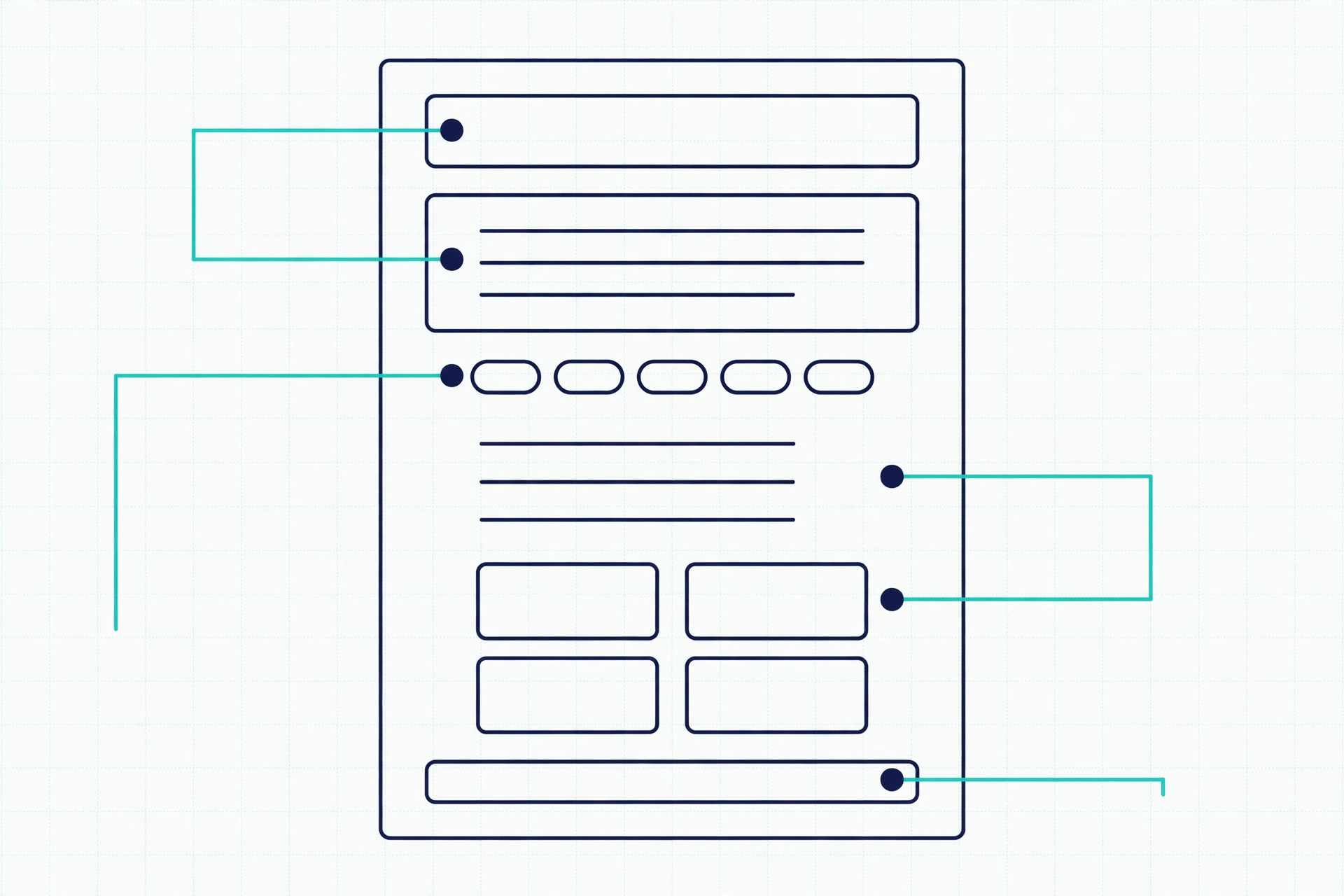
Summary: lead with the traits the job needs, backed by one fact
The example summary names the target, lists two traits (communication, reliability), and anchors each with proof — volunteer coordination, zero missed shifts. Compare that with "Hardworking and motivated individual seeking an opportunity to grow," which no hiring manager can verify or remember.
Formula: who you are + 2 traits with proof + what you're seeking. Keep it to 3 sentences, and lead with a standout fact if you have one.
Skills: front-load this section — it's your headline act
With no job history, the skills section does the heaviest lifting, so it sits directly under the summary. Notice the literal, searchable terms — "Point-of-sale (POS) systems," "Basic data entry (45 WPM)" — not "good with computers." Hiring managers and ATS software match on literal strings, so use the posting's tool names. Only list skills you can demonstrate.
Experience: reframe everything as a role
The example's boldest move is treating volunteer coordination and family-shop work as titled roles with dates and bullets — because they are. Each bullet follows action verb + task + scale. The hiring manager doesn't need a payslip to respect that line; they need specifics — this is where your 20-minute inventory pays off.
Projects and education: your proof sections
A Projects section is the no-experience resume's secret weapon — the class campaign, the portfolio site, the spreadsheet you built, anything with a deliverable. Give each project 2–3 bullets in the verb + scale pattern. Education goes last but stays complete: certificate, school, year, plus one line of relevant coursework if it maps to the job.
What to Put in Every Section When You're Starting Out
Section by section:
- Contact: name, phone, email, city. No photo, no date of birth, no marital status — none of it helps and some of it hurts.
- Summary: 3 sentences — who you are, 2 traits with proof, the role you want.
- Skills: 8–12 literal terms — hard skills (tools, systems) plus the soft skills the posting names. Mirror the posting's vocabulary.
- Experience: every inventory item involving a schedule, a responsibility, or a result — volunteer, gigs, family business, internships. Title it, date it, bullet it.
- Projects: class projects, personal builds, campaigns — anything with a deliverable and 2+ bullets of detail.
- Education: most recent first, with year. Add relevant coursework or strong results in one line.
- Leave off: "References available on request" (assumed), "seeking a challenging position" objectives (says nothing), and hobbies unless they prove a job skill.
One page — always. A two-page resume with no work history reads as padding, and hiring managers know it.
5 Mistakes That Keep No-Experience Resumes in the Bin

- Apologizing for having no experience. Never write "no experience but willing to learn" — it frames the whole page as a deficit. Lead with what you have: skills, projects, reliability proof. Let the reader conclude you're ready.
- Leaving the page half empty. A no-experience resume with three lines under Experience looks unfinished. Fill it honestly: expanded skills, added projects, volunteer work reframed as roles. A full, specific one-pager beats a sparse one every time.
- Vague bullets with no scale. "Helped with events" could mean anything; "Managed sign-in and scheduling for 12 consecutive events, 200+ attendees each" is a credential. Every bullet needs a verb and one concrete detail.
- A generic skills dump. "Hardworking, team player, fast learner, Microsoft Office" appears on a million resumes and matches zero searches. Replace adjectives with literal tools plus proof: "Canva (12 event flyers)," "Excel (budget trackers, 45 WPM data entry)."
- A format an ATS can't parse. Entry-level roles at larger employers go through applicant tracking systems first, so keep it parseable: single column, standard headings, real text — no text boxes or graphics-based skill bars. Before you apply anywhere, run your finished PDF through Cvyon's free ATS grader to confirm every keyword is actually readable.
Build It Free, Then Check It
A strong no-experience resume is one page of translation: your real life rendered in verbs, numbers, and literal skill names. Start with the 20-minute inventory and let the skills section carry the headline. Cvyon's builder is free with no signup — pick a clean one-column template, fill in the sections above, export in minutes. For the entry-level angle, see our entry-level resume guide — then run the finished PDF through the free ATS grader before you send it anywhere.
FAQ
What should I put on a resume if I've never had a job? Your skills, education, projects, and gigs — reframed as titled roles with dates and bullets. The 20-minute inventory in this guide usually surfaces 6–10 usable items. "Never had a job" is not the same as "never did anything."
Is it okay to put volunteer work on a resume? Yes — it's some of the strongest content a no-experience resume can carry. Title it like a role, date it, and write bullets with verbs and scale: scheduled, accountable volunteer work is proof of reliability before anyone pays you.
Should I include a photo on my resume? No. Photos don't help you get hired and can trigger bias filters. Keep the header to name, phone, email, and city.
How do I write a summary with no experience? Three sentences: who you are, two traits each backed by one fact, and the role you're seeking. Example: "Customer-focused school leaver with strong communication skills from volunteer coordination and a family shop. Zero missed shifts across 8 months of weekend work; quick learner of POS and inventory tasks. Seeking an entry-level customer service role."
Will employers take a no-experience resume seriously? Entry-level hiring managers expect no-experience resumes — what they don't forgive is a vague one. A specific, well-formatted one-pager signals exactly what junior hires need to show: reliability, fast learning, attention to detail. The resume itself is the first proof.